
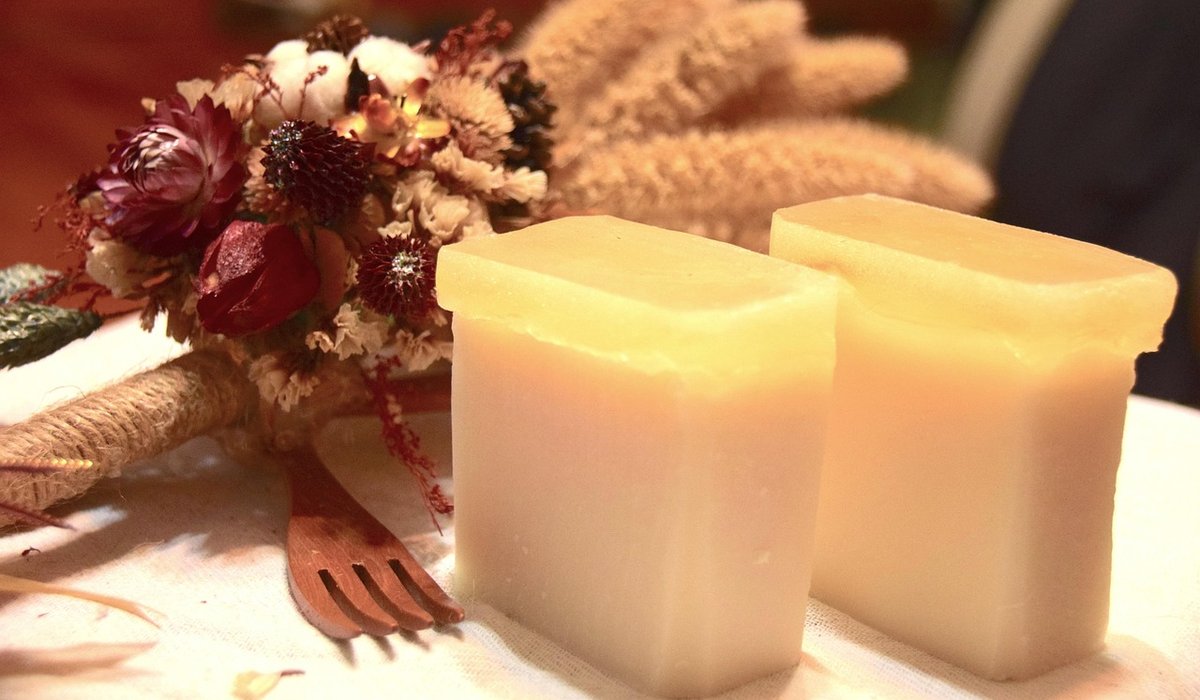
Benefits of Lactic Acid in Goat Milk Soap
What Lactic Acid Is Doing in a Bar of Soap
Lactic acid belongs to the alpha-hydroxy acid (AHA) family, the same group as glycolic and citric acid. It forms naturally when the lactose — milk sugar — in goat milk is fermented by friendly bacteria. Because goat milk is naturally high in lactose, a properly made goat milk soap contains lactic acid as part of the milk itself rather than as a lab-synthesised additive poured in at the end.
Alongside the lactic acid you get the rest of the milk: butterfat, proteins, and minerals. Together they give handmade goat milk soap its distinctive creamy lather and its reputation as a mild choice for daily cleansing. One honest caveat before we go further: soap is a rinse-off product. Contact time with your skin is measured in seconds, not minutes. So think of the lactic acid here as a gentle daily nudge rather than the resurfacing treatment you would get from a leave-on serum. Set your expectations there and you will not be disappointed.
Gentle Exfoliation Without the Sting
AHAs work by loosening the bonds that hold dead skin cells together on the surface. When those bonds relax, the dull, flaky layer sheds more readily and the fresher skin beneath is revealed — smoother to the touch and better able to absorb whatever you apply afterwards.
Lactic acid has a comparatively large molecule. That matters, because larger molecules tend to act at the surface rather than sinking deep into the pore. For sensitive skin, this is exactly the behaviour you want: enough to encourage turnover, not enough to provoke the tingling, redness and tightness that stronger acids can cause.
- Smoother, less rough texture across cheeks, upper arms and legs
- Fewer dry, flaky patches that cling to the edges of the face
- Make-up and moisturiser sitting more evenly on the skin
- A brighter look over weeks of consistent use, not overnight
Holding On to Water: Lactic Acid as a Humectant
Exfoliation is only half the story. Lactic acid is also a humectant, meaning it attracts and holds water at the skin's surface. Its salt form, sodium lactate, is a well-established humectant in leave-on moisturisers for precisely this reason.
In a handmade goat milk bar, that humectant action is supported by two other things. The first is glycerine, a natural by-product of saponification that most handmade makers deliberately leave in the bar. The second is goat milk fat, which is rich in fatty acids that help soften the feel of the skin during washing.
This is why so many people describe the aftermath of a goat milk bar as comfortable rather than squeaky. Squeaky means stripped. Comfortable means the barrier has been left reasonably intact.
Why Handmade Matters for Sensitive Skin
Mass-produced soap is often made with the glycerine extracted and sold on separately, and with synthetic detergents and fragrance added to compensate. A handmade cold-process or hot-process bar keeps the glycerine where it belongs, and most makers keep the ingredient list short.
If your skin reacts easily, read the label with these points in mind:
- Goat milk high on the list — look for "sodium goat milk" or "goat milk" near the top, not "goat milk fragrance" further down
- Unscented or essential-oil-only versions — synthetic fragrance is a common trigger for reactive skin
- A proper cure — bars cured for four to six weeks are milder, harder and longer lasting
- A short list you recognise — oils, milk, lye, perhaps oatmeal or honey, and little else
Be aware, too, that true soap sits at an alkaline pH, usually around 9 to 10. The milk fats help offset the tightness this can cause, but if your skin is very reactive, a low-pH cleanser may still suit you better. There is no shame in that.
Getting the Best From Your Bar
Small habits make a real difference to how a goat milk bar performs on sensitive skin. Use lukewarm water rather than hot, which strips oils far more aggressively. Lather in your hands and apply with your palms rather than scrubbing directly at your face. Thirty seconds is plenty. Rinse thoroughly, pat dry — never rub — and apply moisturiser within a few minutes while the skin is still slightly damp, so you lock that water in.
Keep the bar out of standing water on a well-draining dish, and let it dry between uses; a soggy bar wastes product and goes rancid faster. Introduce it one change at a time, and patch test on the inner forearm for a few days if your skin is unpredictable.
When a Goat Milk Bar Isn't the Right Answer
Goat milk soap is mild, but it is not a treatment. If you are in the middle of an eczema flare, have cracked or broken skin, or are managing a diagnosed skin condition, speak to a pharmacist or your GP before swapping your routine. Stop using any product that stings, burns or leaves your skin redder than it started.
Used sensibly, though, a well-made goat milk bar offers something genuinely useful for sensitive skin: a daily clean that exfoliates gently, supports moisture, and leaves the barrier in decent shape. That is a modest promise — and a reliable one.
tag: Ingredients

Michael Grainger Author
Understand the differences in ingredients, processing, and environmental impact between handmade goat milk soap and mass-produced cleansing bars.
YOU MAY ALSO LIKE

Comparing Goat Milk Soap with Commercial Bars
Aug 14
10Natural glycerin remains in cold-process goat milk soap, attracting moisture to the skin and contributing to a creamy, non-drying lather.
read more
The Role of Glycerin in Handmade Soap
Aug 8
10Combine colloidal oatmeal and local honey with goat milk soap for a soothing bar that gently buffs and comforts dry, irritated skin.
read moreSoap Making
-

ERRIC CATONA
Plan shelter, grazing, and daily routines for a few dairy goats on a smallholding, including legal tagging and movement rules.
May 19, 2016 at 5.12 pm
Reply
ERRIC CATONA
Learn hand-milking technique, hygiene practices, and equipment cleaning to collect fresh milk safely for soap making and home use.
May 19, 2016 at 5.12 pm
Reply -
ERRIC CATONA
Balance hay, pasture, and minerals to support healthy goats and produce milk with good fat and protein levels for soap.
May 19, 2016 at 5.12 pm
Reply
Skincare
Your email address will not be published.